Commissioning
- This is the most important phase in a Project when systems are getting energized with proper technology and interlocks
- Software Testing is evaluation of the software against requirements gathered from users and system specifications. Testing is conducted at the phase level in software development life cycle or at module level in program code. Software testing comprises of Validation and Verification.
- Testing can either be done manually or using an automated testing tool:
- Manual – This testing is performed without taking help of automated testing tools. The software tester prepares test cases for different sections and levels of the code, executes the tests and reports the result to the manager.
- Manual testing is time and resource consuming. The tester needs to confirm whether or not right test cases are used. Major portion of testing involves manual testing.
- Automated – This testing is a testing procedure done with aid of automated testing tools. The limitations with manual testing can be overcome using automated test tools.
- A test needs to check if a webpage can be opened in Internet Explorer. This can be easily done with manual testing. But to check if the web-server can take the load of 1 million users, it is quite impossible to test manually.
- There are software and hardware tools which helps tester in conducting load testing, stress testing, regression testing.
- Testing Approaches
- Tests can be conducted based on two approaches –
- Functionality testing
- Implementation testing
- When functionality is being tested without taking the actual implementation in concern it is known as black-box testing. The other side is known as white-box testing where not only functionality is tested but the way it is implemented is also analyzed.
- Exhaustive tests are the best-desired method for a perfect testing. Every single possible value in the range of the input and output values is tested. It is not possible to test each and every value in real world scenario if the range of values is large.
- System Testing
- The software is compiled as product and then it is tested as a whole. This can be accomplished using one or more of the following tests:
- Functionality testing– Tests all functionalities of the software against the requirement.
- Performance testing– This test proves how efficient the software is. It tests the effectiveness and average time taken by the software to do desired task. Performance testing is done by means of load testing and stress testing where the software is put under high user and data load under various environment conditions.
- Security & Portability– These tests are done when the software is meant to work on various platforms and accessed by number of persons.
On Call Maintenance
- This is focused on providing high quality service to get customer satisfaction
- We are providing this type of Service and doing our best to meet the customer’s expectation.
- We can help with your project from start to finish. Just give us a call and we can discuss your plans with you and help you move toward getting your deck completed.
- We have a lot of offerings to choose from, we’re sure you’ll be happy working with us. Look around our website and if you have any comments or questions, please feel free to contact us.
- We are adhering following Major Steps to ensure success
- Diagnosis:
- The process of corrective maintenance begins with a failure and a diagnosis of the failure.
- The diagnostic process can include a physical inspection of a system, the use of a diagnostic euipment to evaluate the system, interviews with system users.
- It is important to determine what caused the problem in order to take appropriate action.
- Action:
- On site or by remote access. Inspection of the equipment to identify the reason for the failure and the action to be taken to eliminate or reduce the frequency of future similar failures.
- Testing:
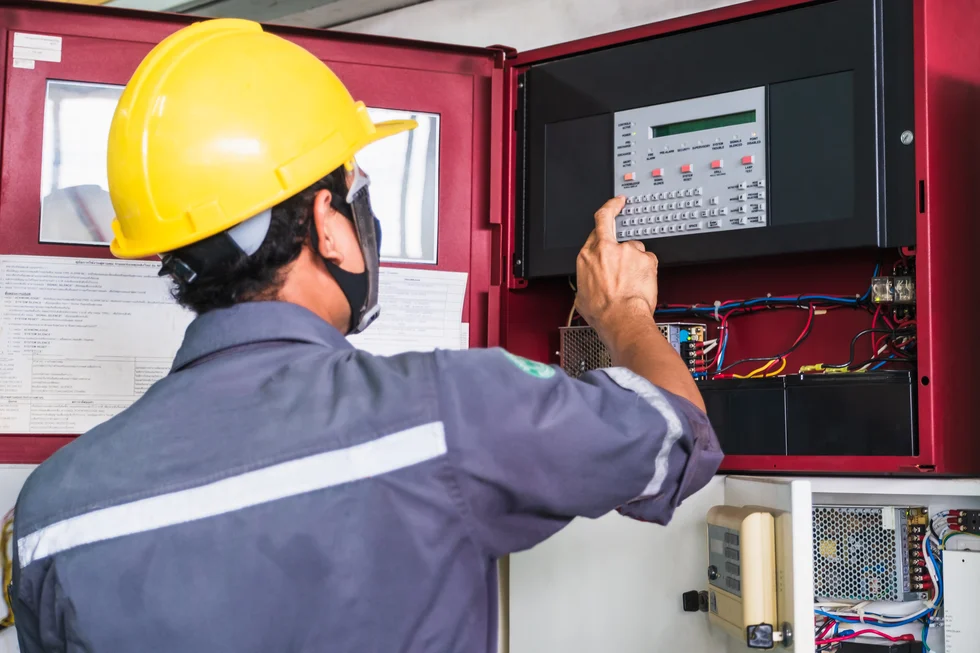
- Our technician or engineers always do through & step by step testing of the system
- All engineers of our local Service points have been trained in all the systems and are fully experienced, with full satisfaction of end users and timely presence on site.
- Training consists in classroom and workshop activities:
- Cognitive approaches to our products with description of operations
- Study of system layout and diagrams
- Analysis of faults and basic reason for occurrence
- Study of the end user’s Use and Maintenance Manual for a complete overview of the documentation supplied
- Practical training on the installed system
AMC (Comprehensive & Non comprehensive)
- Monitor your home from anywhere and anytime
- AMC is the form of contract to provide Operation & Maintenance
- We are a very much prominent Service Provider. The AMC that we offer are highly professional and reliable. Our Annual Maintenance Contract Services are delivered by our professionals at nominal charges.
- Comprehensive AMC
- In a comprehensive AMC, the analysis of breakdowns/faults in the hardware and repairing/service is taken care of by the service provider. This includes spare parts replacement. Apart from this, preventive maintenance is also done, on a pre-determined/agreed-to frequency. Note: It excludes all physical mishandling or damages.
- Non-Comprehensive AMC
- This is similar to a Comprehensive AMC, but in this, the cost of spare parts replacement must be borne by the customer. This usually means only service. Preventive maintenance comes under this and a consultant will advise on hardware bread down.
- Please find below the detailed service activities which are carried our during the service visits :
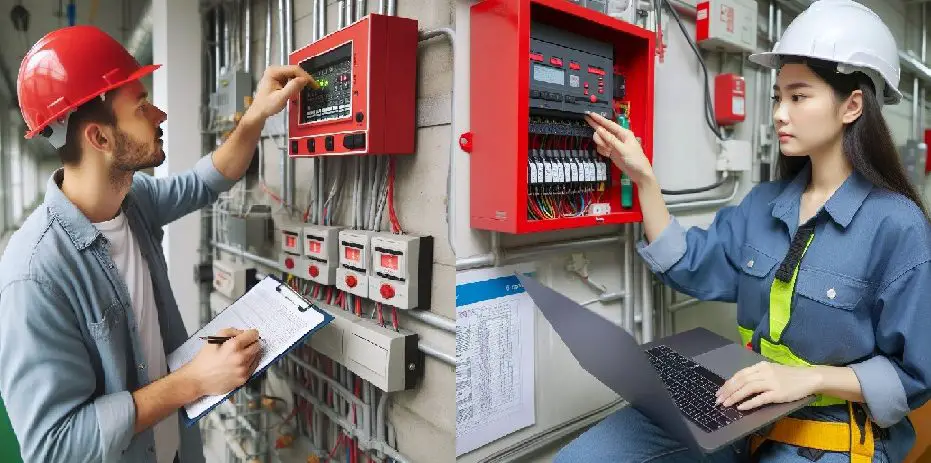
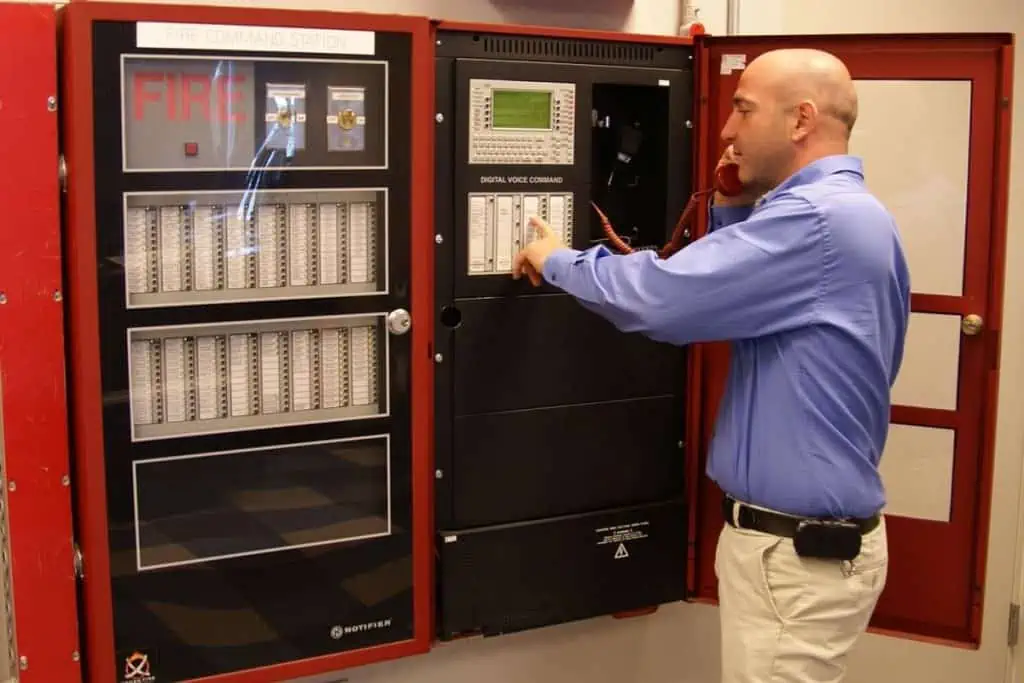
- Inspection of all Controls and Control Panels supplied.
- Operational test of Controls and Control panels.
- Full function tests of equipment.
- Submission of a detailed service report on the functionality of the system
- Suggestion on improvements and upgrades ( if any).
- DVANTAGE SERVICE
- CORRECTIVE MAINTENANCE ( WITHIN AGREED SLA )
- EMERGENCY INTERVENTION ( IN CASE OF LIFE SAFETY)
- INSPECTION BY HIGHLY COMPETENT ENGINEER
- SOFTWARE BACKUP ( CASE TO CASE BASIS)
- FREE SOFTWARE UPDATE ( CASE TO CASE BASIS)
- TELE SUPPORT ( 24×7 SERVICE SUPPORT TO OPERATOR)
- COMPLETEFUNCTIONALITY TEST
- FINE TUNING ( OF COMPONENT IF ANY
Project Execution
- Timely execution within budget is the key of any Project
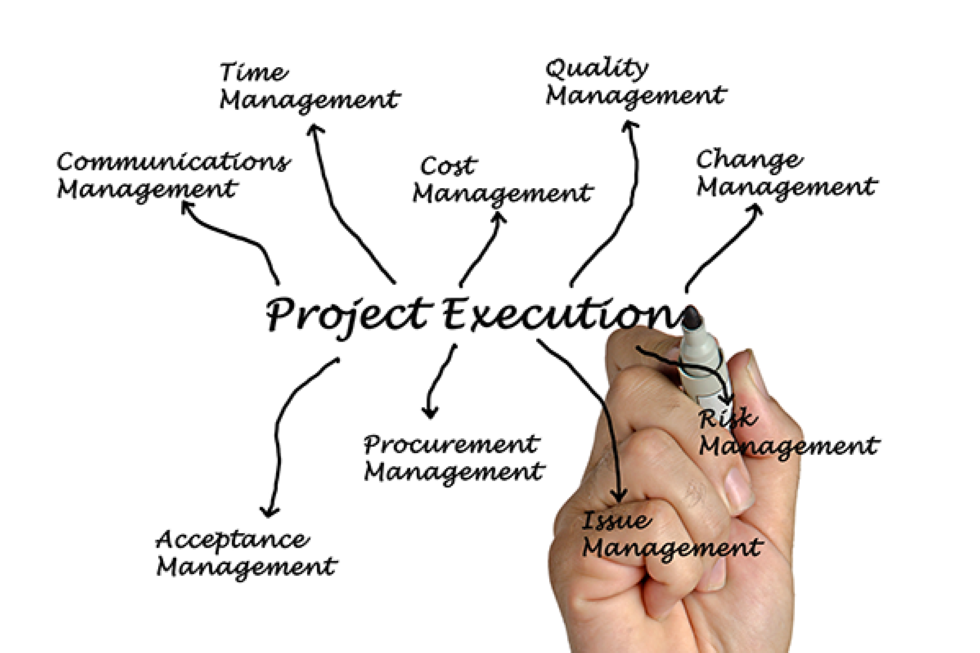
- The whole point of a project is to produce deliverables of some sort and the execution phase is where this happens. Essentially, work is done according to the project plan and that work is monitored and the results fed back to the people responsible for the plan so that it can be updated to reflect the progress made.
- It is possible to see this phase of the project as consisting of two processes: the ‘doing’ or executing, and the monitoring and controlling.
- This phase is often called ‘Execution and Control’ because it does not represent a blind implementation of the initial project plan but rather a cyclical process. As you can see from the diagram above, the planning, executing, and the monitoring and controlling processes are all interdependent.
- The actions performed during this process include
- 1) Performing the activities needed to meet the project objectives
- 2) Obtaining and manage quotations, bids and proposals as needed
- 3) Managing the project team and manage other resources
- 4) Collecting and analyze performance data
- 5) Generating project data for status reports and forecasts
-
- No matter how carefully planned a project has been, changes will need to be made as it progresses. These will result from both external influences as well as problems that arise within the project environment. The four main sources of change are:
- Organizational: High level business decisions may change the basic terms of reference of the project – for example there may be a change to the overall scope of the project.
- Environmental: resulting from changes in legislation or changes in government policy or changes in business strategy.
- Technical: New technology may offer a better solution to that originally planned. Alternatively, technical problems may prevent a product from working in the way that it was supposed to.
- End-User: resulting from changes in customer requirements. It is also possible that feedback gained during the review or testing of a product may show that it is unsuitable in some unexpected way.
- Apart From above, other parameters are as follows.
- Managing the Project Team
- Directing and Managing the Project Work
- Managing Project Quality Assurance
- Managing Communication with Project Stakeholders
- Managing the Suppliers to the Project.
-
-
Operation & Maintenance
- Operation & Maintenance is the key to maintain healthiness of installed system
- We are very serious about this topic and always offer and ensure quality work to reduce or eliminate customer’s pain areas.
- An Operations and Maintenance (O&M) program is a formulated plan of training, cleaning, work practices, and surveillance to maintain healthiness of systems installed inside the buildings or plant. The goal is to minimize the risk and cost of a running building or plant.
- Operation is the performance of a practical work, or a state of working or being able to work, or a way or process that parts of a machine, system, or plant work together smoothly and safely to produce goods in accordance with the procedures.
- Plant Operation is to operate and control of the plant ensuring efficient, safety, and reliable process operation.
- Operation Readiness is the process of preparing the custodians of an asset under construction organisation to the client operation organisation, at the point of delivery and handover facilities, the client is fully prepared to assume ownership of the asset, accepts responsibility for performing the safe and efficient operation of that asset. The Operation Readiness is the management practices for performing pre-start-up reviews of new processes or processes that have been shut down for modification, and processes that have been administratively shut down for other reasons. These practices verify the operational readiness of a process and help to ensure that the process is safe to restart. Identifies organisational tasks, roles and responsibilities, assists with start-up and operations and maintenance, focuses on high priority risks, and analyses opportunities.
- Operability is an ability that the process has the capacity and flexibility to achieve a range of operating conditions safely, reliably, profitably and with good dynamic performance and product quality. The Operability ensures to keep an equipment, a system or a unit and plant in a safe and reliable functioning condition, according to pre-defined operational requirements.
- Maintenance is the activities that performs equipment or facilities to minimize the possibility of damage or the lowering of performance quality because of corrosion, contamination, or deterioration for the continuous operation.
- Maintenance Readiness is a maintenance programmes that covers the maintenance planning and implementation for start-up and ongoing operations.
- Maintainability is the ease and speed of the system restoring to the normal operational status, to prevent unexpected working condition, to maximise a product’s useful life, and to maximise efficiency, reliability, and safety operations. The Maintainability is the probability of performing a successful repair or replace using the prescribed practices and procedures for serviceability and reparability. This is similar to system reliability analysis except that the random variable of interest in maintainability analysis is time-to-repair rather than time-to-failure.